Functional Movement Screening for Root‑Cause Pain Identification
April 6, 2026
9 min

Why Movement Matters
Movement quality is the foundation of a musculoskeletal system. When joints move with proper mobility, stability and coordinated motor control, stress is evenly distributed and tissues avoid the overload that leads to chronic low back, neck, shoulder or knee pain. Back in Action Bodyworks embraces this principle by combining chiropractic adjustments, soft‑tissue therapy, ergonomic counseling and corrective exercise. The clinic’s model evaluates posture, gait, range‑of‑motion and muscle activation before prescribing treatment, ensuring each intervention addresses the underlying biomechanical cause rather than merely masking symptoms. A key component of that assessment is the Functional Movement Screen (FMS), a seven‑test, 0‑to‑3 scoring system that quickly reveals mobility deficits, stability gaps and asymmetries. By integrating FMS findings into a care plan, Back in Action Bodyworks helps patients restore movement, reduce pain and improve wellness.
The Functional Movement Screen: Core Concepts
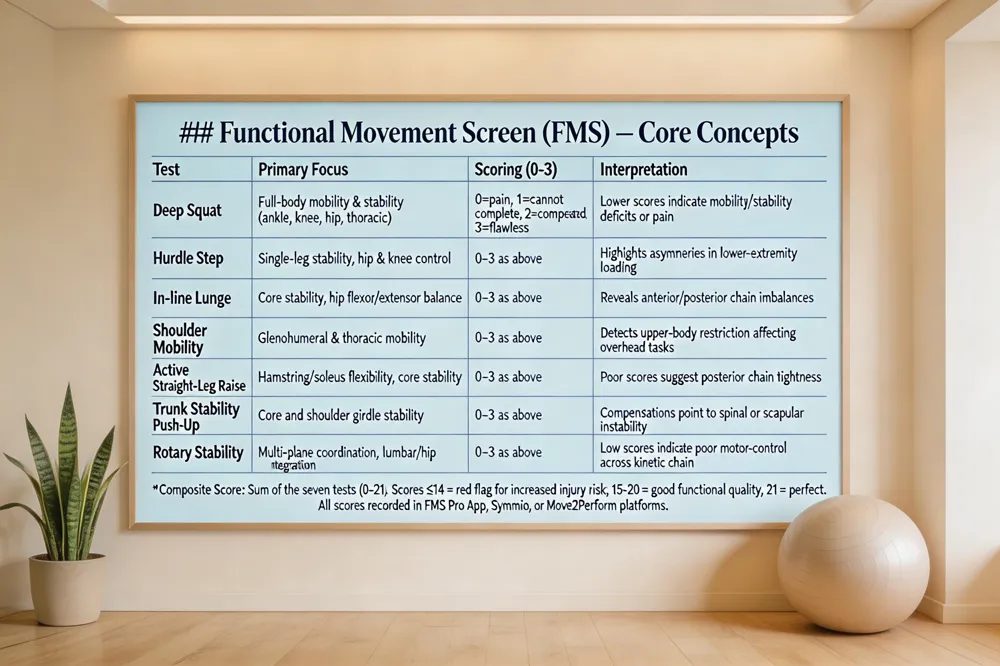 The Functional Movement Screen (FMS)) evaluates seven fundamental movement patterns: the Deep Squat, Hurdle Step, In‑line Lunge, Shoulder Mobility, Active Straight‑Leg Raise, Trunk Stability Push‑Up, and Rotary Stability. Each test is scored on a 0‑3 ordinal scale—0 indicates pain, 1 denotes inability to complete the movement, 2 reflects a compensated but pain‑free execution, and 3 represents a flawless, pain‑free performance. Summing the seven scores yields a composite total out of 21; a score of 14 or lower is widely recognized as a red flag for increased musculoskeletal injury risk. Importantly, the FMS is a screening tool, not a diagnostic exam; it identifies asymmetries, mobility deficits, and stability limitations that may underlie pain, but it does not diagnose specific pathologies. When pain is observed during a test, clinicians refer the patient for a more detailed evaluation such as the Selective Functional Movement Assessment (SFMA) to pinpoint the root cause before prescribing corrective exercise or chiropractic intervention.
FMS as a Root‑Cause Pain Identifier
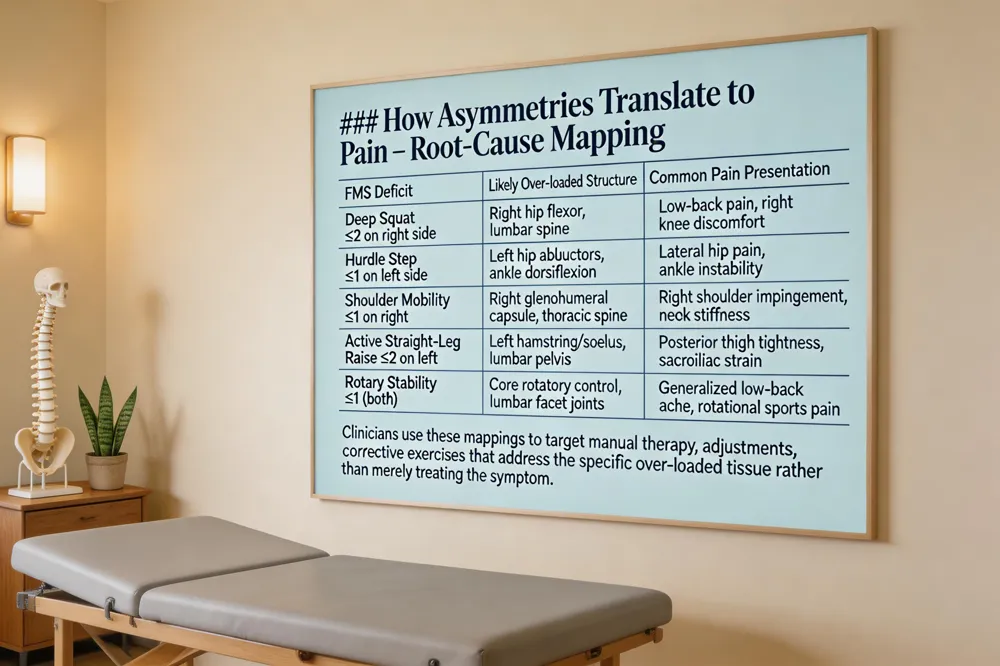 Movement asymmetries are often the hidden source of musculoskeletal pain. The Functional Movement Screen (FMS) evaluates seven fundamental patterns—deep squat, hurdle step, in‑line lunge, shoulder mobility, active straight‑leg raise, trunk stability push‑up, and rotary stability—revealing where mobility, stability, or motor‑control deficits exist. When an asymmetry is identified, the chiropractor can pinpoint the joint or segment that is over‑loading other structures, explaining localized back, neck, shoulder, or knee discomfort.
In Back in Action Bodyworks, the FMS is performed first, then its findings are woven into the broader chiropractic assessment, which includes posture analysis, range‑of‑motion testing, palpation, and the Selective Functional Movement Assessment (SFMA). The SFMA goes a step further by classifying a dysfunctional movement as either a mobility or stability issue, allowing the clinician to select precise manual techniques, adjustments, or corrective exercises that address the root cause rather than merely masking symptoms.
Interpretation of the composite FMS score follows a clear evidence‑based guideline: a total of 14 or higher is generally regarded as a good score, indicating acceptable movement quality and a lower odds of injury. Scores below 14 signal notable deficits and a higher injury risk, prompting targeted corrective programming. The perfect score of 21 reflects flawless, compensation‑free execution of all seven patterns. Regular re‑screening (every 4‑6 weeks) lets patients and clinicians track progress, adjust treatment plans, and maintain optimal functional health.
What is a good FMS score?
A good Functional Movement Screen (FMS) score is generally considered to be 14 or higher, with scores in the mid‑teens to low‑20s indicating solid movement quality and lower injury risk. The perfect score is 21, which means the individual performed all seven movement patterns without compensation on both sides. Scores below 14 suggest notable deficits and a higher likelihood of injury, so they signal the need for targeted corrective work. Most athletes and active individuals aim for a score of 15‑20 to ensure balanced mobility and stability. Regular retesting can track improvements and help fine‑tune a personalized wellness program.
Reliability, Predictive Value, and Research Highlights
 Inter‑rater and intra‑rater reliability of the Functional Movement Screen (FMS) is consistently moderate‑to‑good, with ICC values ranging from 0.70 to 0.80 even when clinicians receive only brief (≈4‑hour) training (Teyhen et al., 2009). This reliability supports its use as a repeatable screening tool across diverse settings, from sports teams to chiropractic clinics. A landmark study by Kiesel et al. (2007) demonstrated a positive likelihood ratio of 5.8 for time‑loss injuries in NFL players who scored ≤ 14, indicating that low composite scores markedly increase injury odds. However, subsequent research cautions against a universal ≤ 14 cutoff; injury prediction appears to vary by sport, age, competition level, and individual biomechanics. Consequently, clinicians should interpret FMS scores within the broader clinical picture—considering patient history, functional demands, and other risk factors—rather than relying solely on a single numeric threshold.
Putting FMS into Practice at Back in Action Bodyworks
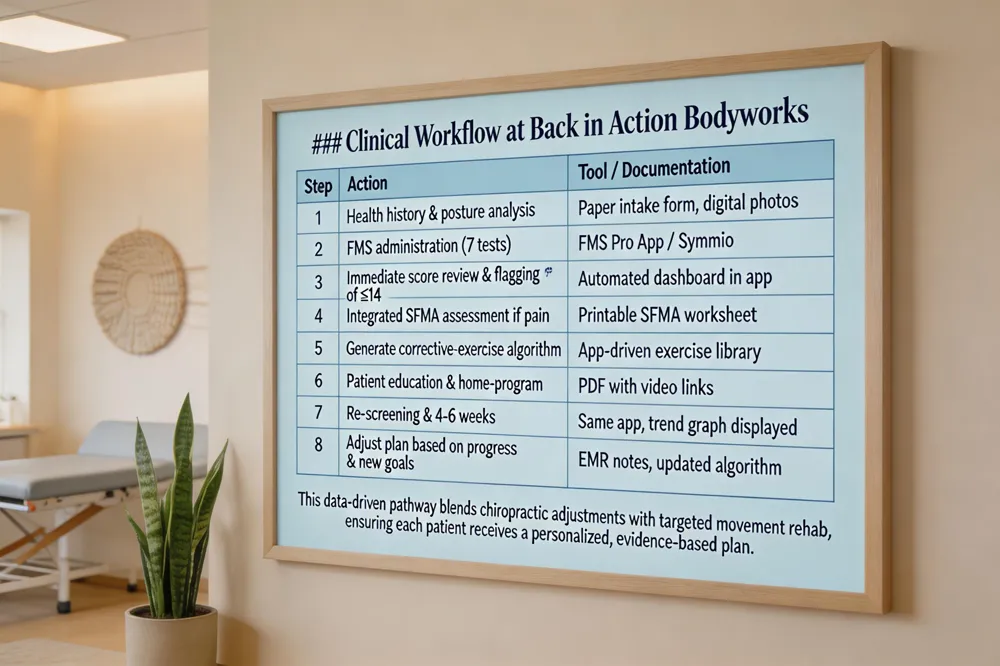 At Back in Action Bodyworks the patient journey begins with a concise health history and posture analysis, which flag obvious asymmetries and pain patterns. The clinician then administers the Functional Movement Screen (FMS) using the seven core tests (deep squat, hurdle step, in‑line lunge, shoulder mobility, active straight‑leg raise, trunk stability push‑up, rotary stability) to quantify mobility, stability and neuromuscular control. Scores are entered into the FMS Pro App, Symmio, or Move2Perform platforms, allowing instant tracking, visual feedback, and integration with electronic health records. The digital tools also generate individualized corrective‑exercise algorithms that target the specific deficits identified—hip‑mobility drills, core‑stability work, shoulder‑mobility drills, and single‑leg balance training. Because Torrance’s residents enjoy outdoor sports, beach activities, and fitness‑center workouts, the clinic tailors these programs to the community’s active lifestyle, emphasizing injury‑prevention for beach volleyball, hiking, and recreational baseball. The result is a data‑driven, patient‑centered treatment plan that blends chiropractic adjustments, manual therapy, and movement‑based rehabilitation to address the root cause of pain and improve functional health.
Corrective Exercise, Self‑Administration, and Ongoing Progress
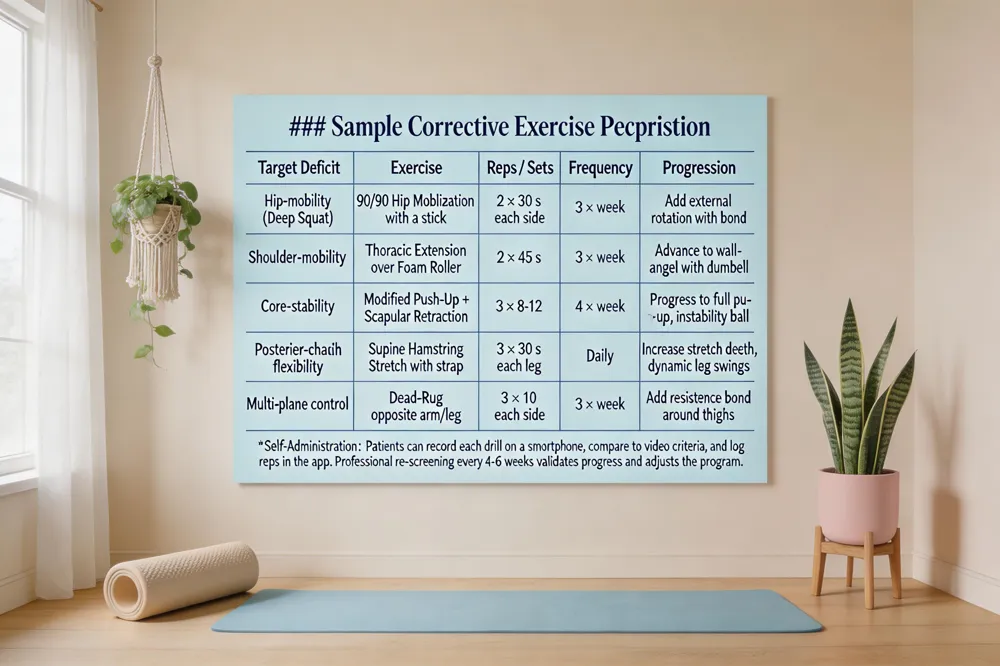 Mobility drills, core stability work, and neuromuscular re‑education form the backbone of corrective exercise programs derived from Functional Movement Screen (FMS) findings. Typical drills include hip‑flexor stretches, thoracic rotation mobilizations, planks, dead‑bugs, and band‑pull‑apart shoulder work, each targeting the specific deficits revealed by the screening. To track improvement, clinicians recommend re‑screening every 4‑6 weeks, allowing objective comparison of scores and timely adjustments to the exercise plan.
Can FMS be self‑administered? Yes, patients can perform a self‑administered Functional Movement Screen by recording their movements on a smartphone and estimating scores against the published criteria. However, professional evaluation remains more reliable because trained clinicians can detect subtle compensations, ensure proper cueing, and safely interpret pain‑related findings. Self‑screening can be useful for periodic self‑monitoring between visits, but it should complement—not replace—regular in‑clinic assessments.
Key Clinical Questions Answered
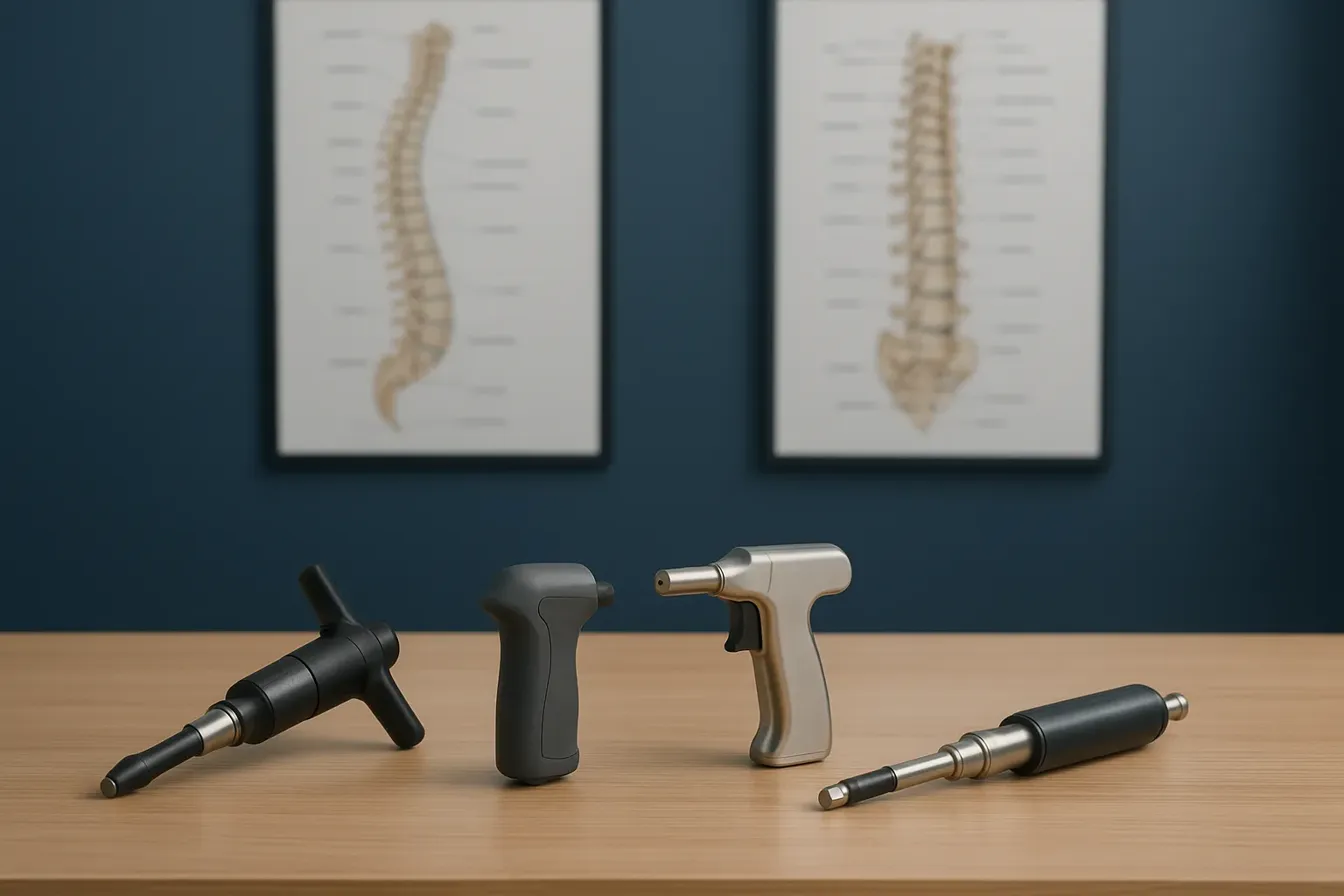
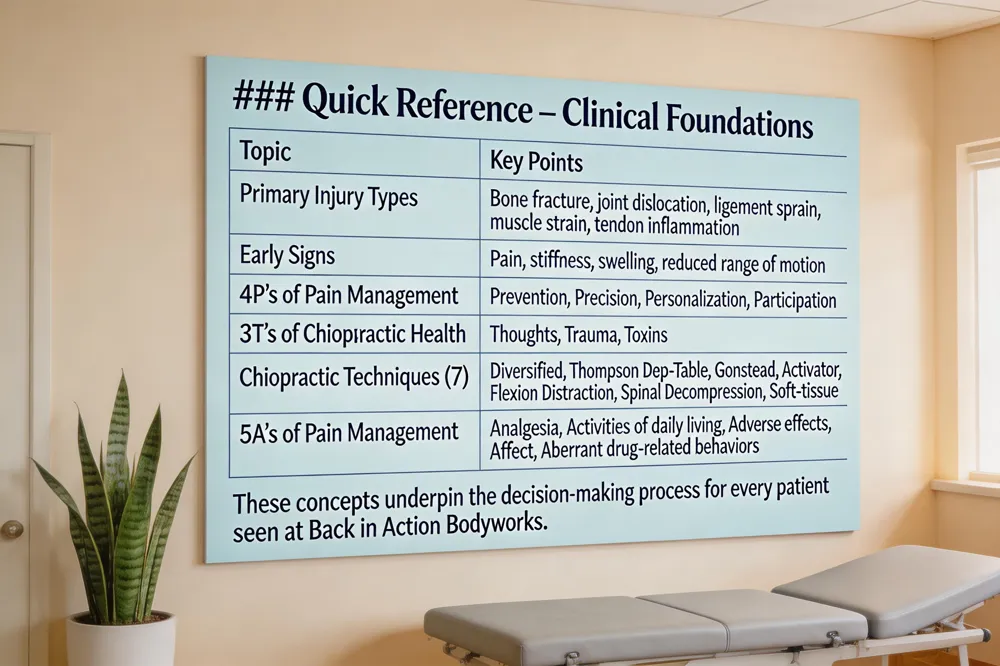 Understanding musculoskeletal health begins with recognizing the five primary injury types—bone fractures, joint dislocations, ligament sprains, muscle strains, and tendon inflammation (tendinitis). Early signs of a disorder often manifest as pain, stiffness, and swelling, prompting timely assessment. Chiropractic care employs the 4 P’s of pain management—Prevention, Precision, Personalization, and Participation—to address discomfort holistically. Foundational chiropractic concepts focus on the 3 T’s—thoughts, trauma, and toxins—recognizing that mental stress, physical injury, and environmental factors influence nerve health. When an adjustment is indicated, practitioners may choose from seven proven techniques, including Diversified, Thompson Drop‑Table, Gonstead, Activator, Flexion Distraction, and Spinal Decompression, each tailored to the patient’s specific dysfunction. Finally, comprehensive pain management follows the five A’s—analgesia, activities of daily living, adverse effects, affect, and aberrant drug‑related behaviors—to ensure safe, effective, and patient‑centered outcomes.
Future Directions: Integrated Screening and Community Health
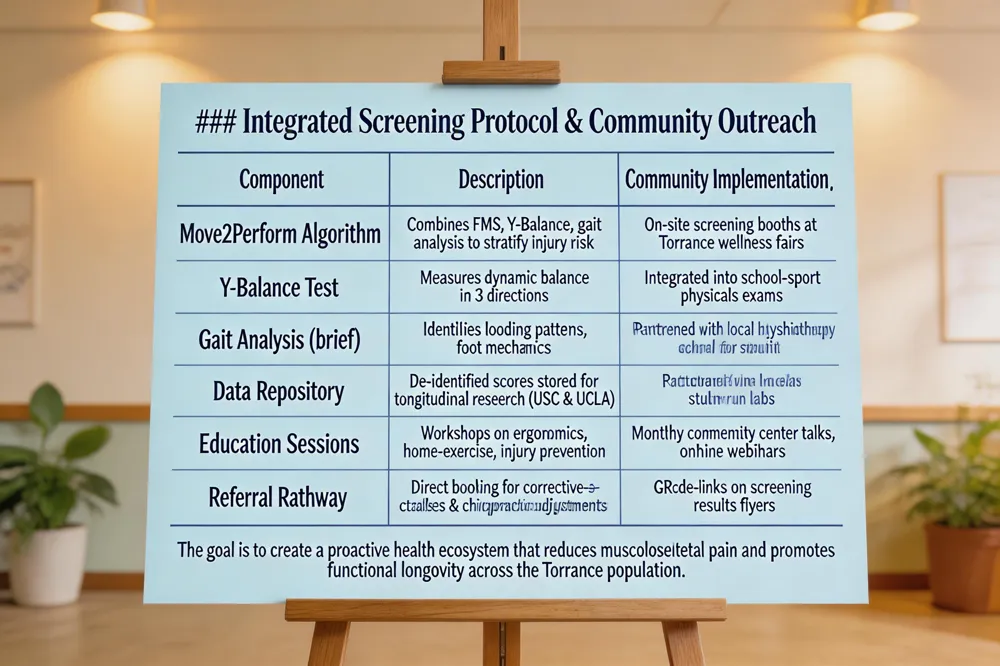 Back in Action Bodyworks is expanding its preventive care model by adopting the Move2Perform injury‑prevention algorithm, which blends FMS scores with balance, history and prior injuries to stratify risk and prescribe individualized corrective programs. To enhance movement insight, the clinic will pair the FMS with the Y‑Balance Test and a brief gait analysis, creating a comprehensive biomechanical profile that pinpoints asymmetries across the kinetic chain. These data‑rich screenings will be showcased at Torrance community events and wellness fairs, where residents can receive on‑site movement checks, education on ergonomic habits, and referrals to personalized chiropractic and exercise plans. Partnerships with nearby research institutions—USC and UCLA—will allow the practice to contribute to longitudinal studies on functional screening outcomes, validate the integrated protocol, and bring cutting‑edge evidence back to the local population. This collaborative, patient‑centered approach aims to reduce musculoskeletal pain, improve functional health, and foster a culture of proactive wellness throughout Torrance.
From Screening to Sustainable Wellness
The Functional Movement Screen (FMS) provides a systematic, evidence‑based way to uncover mobility, stability and neuromuscular asymmetries that often lie at the root of low‑back, neck, shoulder and joint pain. By scoring seven fundamental patterns on a 0‑3 scale, clinicians can pinpoint deficits—such as limited hip flexion or poor core control—before they evolve into chronic injury. Back in Action Bodyworks in Torrance invites patients to schedule a brief FMS appointment, where the screen is integrated with a thorough history, posture analysis and orthopedic testing. The clinic then creates a personalized corrective‑exercise and chiropractic plan, re‑assessing every 4‑6 weeks to track progress, adjust interventions and ensure lasting functional health.
Recent articles

10 Real‑Patient Success Stories Showcasing the Impact of Chiropractic Care

Superfoods That Boost Nerve Healing After Chiropractic Sessions

Sleep Positions That Promote a Healthy Back Alignment
Signs Your Chiropractor Is a Good Fit for Your Back Pain Goals
Case Study: Integrated Physiotherapy and Chiropractic for Faster Recovery
First-Time Chiropractic Visit: A Step‑by‑Step Walkthrough
Synergistic Benefits: Combining Physiotherapy with Chiropractic Care

Beyond Surgery: Holistic Approaches to Managing Back Pain

How Manual Therapy Enhances the Effects of Chiropractic Adjustments

Hydration Hacks: Why Water Matters for Joint and Spine Function

What Does a Comprehensive Spinal Evaluation Include?

Success Spotlight: Transformative Results After Six Weeks of Chiropractic Treatment

Understanding the Initial Assessment Process in Chiropractic Care

Designing a Personalized Corrective Exercise Plan for Chronic Pain Management

Natural Pain Management: Combining Acupuncture, Yoga, and Chiropractic
Chiropractic Care vs. Pain Meds: Long-Term Outcomes for Back Pain Sufferers

What to Expect During a Sciatica‑Focused Decompression Session

Understanding the Pain-Relief Mechanics Behind Chiropractic Adjustments

Success Rates of Non‑Surgical Spinal Decompression for Sciatica

Patient-Centered Chiropractic Care: Personalized Plans for Back Pain Relief
How Chiropractic Treatments Reduce Inflammation and Speed Up Back Pain Recovery

Real‑Life Stories: How Chiropractic Helped Patients Overcome Chronic Back Pain

From Symptom Masking to Root‑Cause Healing: A Practical Guide

6 Holistic Non‑Surgical Treatments That Deliver Sustainable Back‑Pain Relief

Key Questions to Ask When Selecting Your Chiropractor

Mindful Movement: Incorporating Stretch Breaks Into a Busy Day

Why Targeting the Underlying Cause Beats Temporary Symptom Relief

8 Ways Physiotherapy Complements Chiropractic Adjustments for Faster Recovery
Meal Planning for Athletes Recovering from Back Injuries

9 Everyday Lifestyle Tweaks to Preserve a Healthy Spine and Prevent Pain
Functional Movement Screening for Root‑Cause Pain Identification

6 Things You’ll Experience During Your First Chiropractic Appointment

Spinal Decompression vs. Standard Physical Therapy for Sciatica: A Comparative Review

New Findings on How Adjustments Influence Blood Circulation
Work‑From‑Home Ergonomics: A Blueprint for a Pain‑Free Back

The Link Between Chiropractic Care and Improved Sleep Quality

Physiotherapy Techniques That Strengthen the Benefits of Chiropractic Adjustments

Biomechanical Insights Behind Successful Spinal Decompression

Desk‑to‑Dumbbell: Lifestyle Shifts That Guard Your Lower Back

10 Corrective Exercises for Sustainable Pain-Free Living

Morning Routines That Support Spine Health and Reduce Stiffness

Calcium and Magnesium‑Focused Nutrition for Bone Density and Spine Health

9 Ways Chiropractic Care Transforms Back Pain Management

Testimonial: Nutrition‑Guided Recovery Accelerated by Chiropractic
Science‑Backed Spinal Decompression for Relieving Sciatica Symptoms

Key Questions to Ask During Your Initial Chiropractic Consultation
Whole‑Body Wellness Blueprint: Nutrition, Exercise, and Chiropractic Synergy

A 12‑Week Corrective Exercise Blueprint for Chronic Neck Discomfort

Manual Therapy Plus Targeted Exercise: Accelerating Post‑Injury Recovery
Home‑Based Spinal Decompression Devices: What Patients Should Know

Chiropractic Care Statistics: Reducing Lost Workdays From Back Pain

How Targeted Nutrition Enhances Immune Function and Lowers Inflammatory Pain

Self‑Assessment Tools to Identify Hidden Triggers of Back Pain

Preparing for Your First Chiropractic Appointment: A Practical Checklist

Back Pain Relief Benefits: Lower Opioid Use and Better Quality of Life

Foam‑Rolling Techniques to Complement Chiropractic Adjustments

Progressive Overload Principles in Corrective Exercise Programs

Six‑Month Transformation: Integrated Care Success Story

7 Nutritional Hacks to Boost Your Overall Wellness

How to Choose a Chiropractor: Credentials, Techniques, and Patient Compatibility

5 Ways Spinal Decompression Can Ease Sciatica Pain

Overcoming Sciatica: A Patient’s Multidisciplinary Treatment Journey
Lifestyle Changes That Promote a Healthy Spine
Physiotherapy as a Complement to Chiropractic Treatments
6 Ways Physiotherapy Enhances Chiropractic Treatment Outcomes

Daily Living Tips for a Strong and Healthy Spine

How Physiotherapy Enhances Chiropractic Outcomes
Holistic Treatments: Alternatives to Surgery for Pain Relief
Inspiring Patient Success Stories from Chiropractic Clinics

Integrating Physiotherapy with Chiropractic Treatments
Corrective Exercise Routines for Chronic Pain Prevention
10 Corrective Exercises to Maintain a Healthy Spine and Relieve Pain
Exercise Strategies for Long-Term Pain Management
10 Corrective Exercises to Maintain a Healthy Spine and Relieve Pain
The Importance of Treating the Root Cause of Pain
Nutritional Support Strategies for Whole-Body Wellness
7 Essential Questions to Ask When Choosing Your Chiropractor
Identifying and Addressing Root Causes of Pain
Maintaining a Healthy Spine with Lifestyle Adjustments
Sciatica Symptom Relief via Spinal Decompression
8 Reasons Why Addressing the Root Cause of Pain Is Crucial
Chiropractic Care’s Impact on Back Pain Recovery

Combining Physiotherapy with Chiropractic Care for Better Results
Inspiring Recovery: Chiropractic Patient Testimonials
Nutritional Counseling Tips for Optimal Wellness

Why Addressing the Root Cause of Pain is Crucial
Back Pain and Chiropractic Care: A Winning Combination
Chiropractic Care Benefits You Might Not Know
Exploring Holistic and Non-Surgical Treatments for Pain
Spinal Health: Lifestyle Tips for Everyday Wellness
Spinal Decompression Therapy: Benefits and Applications
Holistic and Non-Invasive Spine Care Options
Everyday Lifestyle Advice to Keep Your Spine Healthy
The Significance of Treating Root Causes in Pain Therapy
Best Corrective Exercises for Sustainable Pain Management
Addressing Underlying Causes of Pain for Long-Term Relief
6 Key Benefits of Spinal Decompression Therapy for Sciatica Relief

How Nutritional Counseling Supports Spine Health and Recovery
The Role of Physiotherapy in Supporting Chiropractic Treatments