Sleep Positions That Promote a Healthy Back Alignment
May 4, 2026
8 min

Why Sleep Posture Matters for Back Health
A neutral spine during sleep is the cornerstone of chiropractic wellness; when the ears, shoulders and hips form a straight line, muscular tension is minimized and the spine can repair overnight. Pillow and mattress selection directly shape this alignment: a medium‑firm mattress supports the natural S‑curve, while a cervical or contoured pillow keeps the neck in line with the torso. For back sleepers, a pillow under the knees flattens the lumbar curve; side sleepers benefit from a firm pillow between the knees and a supportive head pillow that fills the ear‑to‑mattress gap. Stomach sleeping forces the neck to twist and flattens lumbar curvature, creating strain. By choosing the right sleep position and ergonomics, patients can sustain spinal health, reduce pain, and complement chiropractic treatment.
Fundamentals of Spinal Alignment in Sleep

Best sleeping position for back pain
The best sleeping position for back pain is on your back with a pillow under your knees. This preserves your lower back's natural curve and reduces strain on your spine. It is considered the gold standard for overall spinal alignment.
Side sleeping is also highly effective. Draw your legs up slightly and place a firm pillow between your knees to keep your hips, pelvis, and spine aligned. This can reduce spinal pressure by nearly half. A small pillow under the waist can fill any gap between your body and the mattress.
What is the best position to sleep in for back alignment?
Back sleeping supports the spine's natural curve and minimizes pressure points. Place a pillow under your knees to relax lower back muscles and maintain proper alignment. Use a cervical or contoured pillow to keep your neck in line with your spine.
Side sleeping is an excellent alternative. Keep your knees slightly bent and place a firm pillow between them to prevent hip and lower‑back twisting. A full‑length body pillow can provide additional support throughout the night.
Best position to sleep for lower back pain
The best sleep position for lower back pain is on your back with a pillow under your knees. This relaxes back muscles and preserves the natural curve of your lumbar spine. A small rolled towel under your waist can add extra support.
Side sleeping is also effective with a firm pillow between your knees to keep your hips, pelvis, and spine aligned. Avoid sleeping on your stomach, as it arches your lower back and forces your neck to twist, increasing strain.
Choosing a supportive mattress
A medium‑firm mattress provides even support, allowing your spine to stay aligned throughout the night. It distributes body weight evenly and reduces pressure points. Side sleepers with wider hips may benefit from a mattress that allows the hips to sink slightly for proper alignment. Replace your mattress every 7 to 10 years, as sagging reduces support and can prevent natural spine alignment.
Side‑Sleeping Strategies for Upper, Middle, and Lower Back Pain

{ "description": "QuietSide‑sleeping is a chiropractor‑approved posture that can relieve pain across the thoracic and lumbar spine when the body is properly supported. Neutral spine alignment reduces back and neck pain during sleep.\n\nKnee pillow placement for hip and pelvis alignment – A pillow placed between the knees while side sleeping prevents the upper leg from pulling the pelvis and lower spine out of alignment. This simple adjustment reduces pressure on the lower back and supports the hip joint, a key factor for both middle‑ and lower‑back comfort.\n\nHead‑neck pillow selection for side sleepers – Use a cervical or contoured pillow to support the neck's natural curve. Choose a neck pillow that keeps the neck in line with the chest and back. Adjustable pillows allow you to add or remove fill for the correct loft and alignment, protecting the cervical and upper thoracic regions.\n\nAdjustments for shoulder‑blade discomfort – For pain between the shoulder blades, place a thick pillow under the upper arm and a rolled towel or small lumbar pillow under the upper back. This fills the gap created by the side‑lying position and distributes weight evenly across the thoracic spine.\n\nLeft vs. right side considerations – Both sides are viable; the left‑side fetal position reduces GERD symptoms by lessening pressure on the lower esophagus, and pregnant individuals may benefit from sleeping on the left side to improve circulation to the heart and reduce pressure on the back. Regardless of side, keep a pillow between the knees and a supportive head‑neck pillow to preserve spinal alignment.\n\nTargeted answers – \n- Upper back pain: Back sleeping with a knee pillow or side sleeping with a knee pillow and neck‑support pillow; avoid tight fetal curl. \n- Shoulder‑blade pain: Side‑sleep with arm pillow and upper‑back roll; back sleeping with a small towel under the upper back. \n- Middle back pain: Side sleeping with knee pillow; back sleeping with knee pillow; firm mattress and cervical pillow. \n- Best side: Choose left or right based on personal health needs, always using knee and head‑neck support.\n\nThese evidence‑based adjustments, endorsed by leading spine specialists, help patients achieve neutral spine alignment, reduce nightly discomfort, and promote natural, holistic healing.", "tags": ["side sleeping", "knee pillow", "neck pillow", "back pain relief", "spinal alignment"] }
Stomach Sleeping: Risks, Blood Flow, and Mitigation

Stomach (prone) sleeping is consistently ranked as the worst position for both lower‑ and upper‑back pain. By forcing the spine into a hyper‑extended, flattened curve, it removes the natural S‑shaped support that protects vertebral discs and ligaments. The neck must rotate to one side to breathe, creating cervical strain that radiates into the thoracic region and often results in neck and upper‑back discomfort. When stomach sleeping is unavoidable, the literature recommends a very thin or no pillow under the head and a thin pillow under the pelvis or lower abdomen to lessen lumbar arching and reduce pressure on the lower back. This modest adjustment can mitigate spinal strain but does not fully restore neutral alignment. Additionally, the prone posture compresses the chest and abdomen, limiting venous return and overall blood flow, which may exacerbate circulation problems and increase fatigue. Side or back sleeping, with a pillow between the knees for side sleepers or a pillow under the knees for back sleepers, maintains a neutral spine and promotes optimal circulation. Chiropractic professionals often advise patients to transition away from stomach sleeping, using supportive pillows and a medium‑firm mattress to protect spinal health and enhance restorative sleep.
Choosing Pillows, Mattresses, and Daily Habits for a Healthy Back
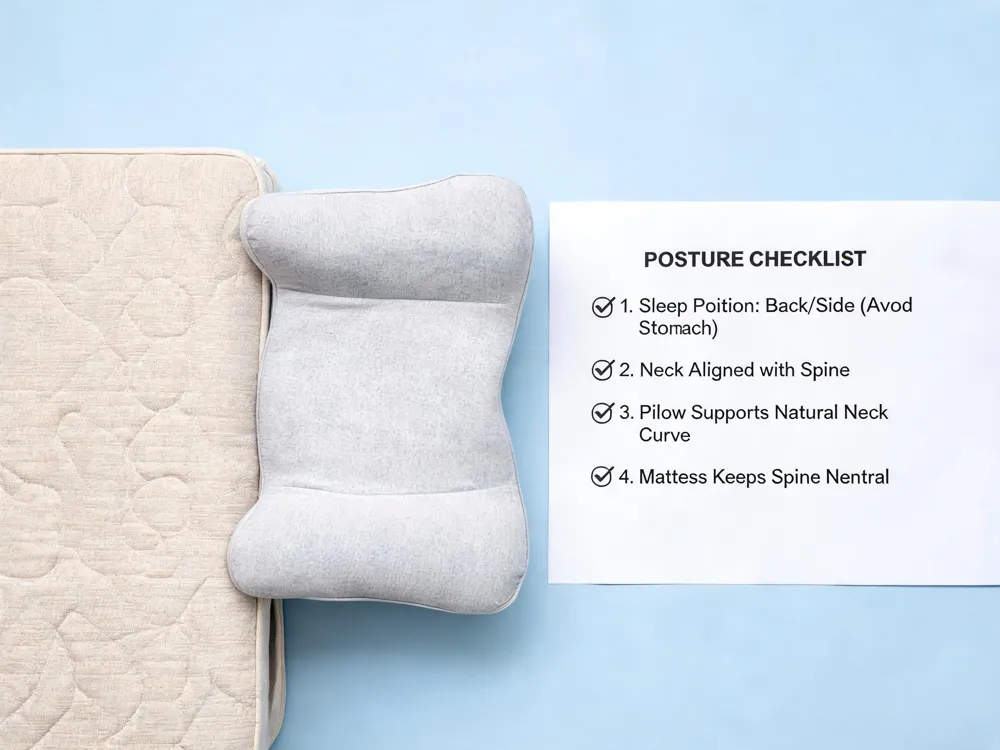
Choosing the right pillow, mattress, and daily habits is essential for maintaining a neutral spine and reducing back pain.
Pillow types – Cervical or contoured pillows cradle the natural curve of the neck for back sleepers, while side sleepers benefit from a higher, firm pillow that fills the gap between the ear and mattress. Adjustable pillows made of breathable latex, memory foam, or shredded foam let you customize loft to keep the head and neck aligned without pushing the spine out of line.
Mattress firmness and replacement – A medium‑firm to firm mattress provides the even support needed for most adults. It should hold the body’s weight without excessive sinking, preserving the spine’s natural S‑curve. Replace mattresses every 7–10 years (or sooner if sagging) to prevent loss of support.
Bad habits that worsen back pain – Prolonged sitting with slouching, sleeping on a too‑soft mattress, and using an overly high pillow are the most detrimental. These habits compress discs, strain muscles, and force the neck into hyper‑flexion.
Lifestyle tips – Incorporate gentle stretches (knee‑to‑chest, cat‑cow) before bed, maintain good posture throughout the day, and practice sleep hygiene such as a cool, dark room and limited screen time.
Answers to common questions
- Worst thing you can do for back pain? Sitting for long periods with poor posture, which overloads spinal discs and weakens supportive muscles.
- How to sleep to realign your spine? Sleep on your back with a pillow under the knees, or on your side with a pillow between the knees; avoid stomach sleeping.
- Best position for back problems? Side sleeping with a knee pillow, or back sleeping with knee support, both keeping the spine neutral and reducing pressure.
Comprehensive Sleep‑Health Routine for Long‑Term Back Wellness

A nightly routine that blends gentle stretching, mindful relaxation, and strategic pillow placement can dramatically improve spinal health and reduce back pain.
Pre‑bedtime stretching and relaxation techniques – Spend 5‑10 minutes performing low‑impact stretches such as knee‑to‑chest, Child’s Pose, and Cat‑Cow to release tension in the lumbar and cervical regions. Follow the stretches with deep‑breathing or a short guided meditation to calm the nervous system, which helps muscles stay relaxed throughout the night.
Log‑rolling and safe repositioning for spine surgery patients – After spinal surgery, avoid twisting at the waist when changing positions. Instead, practice log‑rolling: keep the knees bent, engage the core, and roll the whole body as a unit. This technique protects the surgical site and maintains a neutral spine while you shift from supine to side positions.
Consistent sleep duration and sleep hygiene – Aim for 7‑9 hours of uninterrupted sleep each night. Keep the bedroom cool (60‑67°F), dark, and quiet; limit screen exposure at least 30 minutes before bedtime, and establish a regular bedtime routine. Consistency supports tissue repair, reduces inflammation, and lowers pain sensitivity.
When to seek professional evaluation – If you wake up with persistent stiffness, radiating pain, or numbness despite using proper pillow support and alignment techniques, consult a chiropractor or spine‑care specialist. A thorough assessment can identify underlying postural imbalances and guide personalized ergonomic adjustments.
Best sleeping position for spine alignment – Back sleeping is the gold standard; a cervical or contoured pillow supports the neck’s natural curve, and a pillow under the knees flattens the lumbar curve, relieving lower‑back stress. Side sleeping is a viable alternative when a firm pillow is placed between the knees to keep the hips and pelvis aligned, and a supportive head pillow maintains neutral neck positioning. Avoid stomach sleeping, as it forces neck rotation and flattens the lumbar spine, increasing strain.
Best position to sleep left or right – Both left and right side sleeping can preserve spinal neutrality when proper support is used. Left‑side sleeping may lessen gastro‑esophageal reflux and is advantageous during pregnancy, while right‑side sleeping can reduce cardiac pressure for some individuals. Choose the side that feels most comfortable, always using a pillow between the knees and a head pillow that aligns the cervical spine.
By integrating these evidence‑based practices into your nightly routine, you promote a neutral spine, enhance restorative sleep, and support long‑term back wellness.
Putting It All Together for a Pain‑Free Night
A spine‑friendly night starts with a neutral‑spine sleep position: back‑sleepers should use a cervical or contoured pillow for neck support and a pillow under the knees to flatten the lumbar curve; side‑sleepers benefit from a firm pillow that aligns the head and a pillow between the knees (or a full‑length body pillow) to keep the pelvis and hips level; stomach‑sleepers, if unavoidable, should use a very thin pillow under the pelvis and none or a soft pillow under the head to lessen rotation strain. A medium‑firm mattress that supports the natural S‑curve of the spine is essential, and replacing it every 7‑10 years prevents sagging that compromises alignment. Complement the night with daily habits such as gentle stretching (knee‑to‑chest, Child’s Pose), regular cardio‑strength‑flexibility work, maintaining a healthy weight, and avoiding nicotine. For a truly individualized plan, schedule a consultation with Back in Action Bodyworks in Torrance, where our chiropractors will assess your sleep ergonomics and recommend personalized pillow, mattress, and lifestyle adjustments for lasting back‑and‑neck relief.
Recent articles

10 Real‑Patient Success Stories Showcasing the Impact of Chiropractic Care

Superfoods That Boost Nerve Healing After Chiropractic Sessions
Sleep Positions That Promote a Healthy Back Alignment
Signs Your Chiropractor Is a Good Fit for Your Back Pain Goals
Case Study: Integrated Physiotherapy and Chiropractic for Faster Recovery
First-Time Chiropractic Visit: A Step‑by‑Step Walkthrough
Synergistic Benefits: Combining Physiotherapy with Chiropractic Care

Beyond Surgery: Holistic Approaches to Managing Back Pain

How Manual Therapy Enhances the Effects of Chiropractic Adjustments

Hydration Hacks: Why Water Matters for Joint and Spine Function

What Does a Comprehensive Spinal Evaluation Include?

Success Spotlight: Transformative Results After Six Weeks of Chiropractic Treatment

Understanding the Initial Assessment Process in Chiropractic Care
Designing a Personalized Corrective Exercise Plan for Chronic Pain Management

Natural Pain Management: Combining Acupuncture, Yoga, and Chiropractic
Chiropractic Care vs. Pain Meds: Long-Term Outcomes for Back Pain Sufferers

What to Expect During a Sciatica‑Focused Decompression Session

Understanding the Pain-Relief Mechanics Behind Chiropractic Adjustments

Success Rates of Non‑Surgical Spinal Decompression for Sciatica

Patient-Centered Chiropractic Care: Personalized Plans for Back Pain Relief
How Chiropractic Treatments Reduce Inflammation and Speed Up Back Pain Recovery
Real‑Life Stories: How Chiropractic Helped Patients Overcome Chronic Back Pain

From Symptom Masking to Root‑Cause Healing: A Practical Guide

6 Holistic Non‑Surgical Treatments That Deliver Sustainable Back‑Pain Relief

Key Questions to Ask When Selecting Your Chiropractor

Mindful Movement: Incorporating Stretch Breaks Into a Busy Day

Why Targeting the Underlying Cause Beats Temporary Symptom Relief

8 Ways Physiotherapy Complements Chiropractic Adjustments for Faster Recovery
Meal Planning for Athletes Recovering from Back Injuries

9 Everyday Lifestyle Tweaks to Preserve a Healthy Spine and Prevent Pain
Functional Movement Screening for Root‑Cause Pain Identification

6 Things You’ll Experience During Your First Chiropractic Appointment

Spinal Decompression vs. Standard Physical Therapy for Sciatica: A Comparative Review

New Findings on How Adjustments Influence Blood Circulation
Work‑From‑Home Ergonomics: A Blueprint for a Pain‑Free Back
The Link Between Chiropractic Care and Improved Sleep Quality

Physiotherapy Techniques That Strengthen the Benefits of Chiropractic Adjustments

Biomechanical Insights Behind Successful Spinal Decompression

Desk‑to‑Dumbbell: Lifestyle Shifts That Guard Your Lower Back
10 Corrective Exercises for Sustainable Pain-Free Living

Morning Routines That Support Spine Health and Reduce Stiffness

Calcium and Magnesium‑Focused Nutrition for Bone Density and Spine Health

9 Ways Chiropractic Care Transforms Back Pain Management
Testimonial: Nutrition‑Guided Recovery Accelerated by Chiropractic
Science‑Backed Spinal Decompression for Relieving Sciatica Symptoms
Key Questions to Ask During Your Initial Chiropractic Consultation
Whole‑Body Wellness Blueprint: Nutrition, Exercise, and Chiropractic Synergy
A 12‑Week Corrective Exercise Blueprint for Chronic Neck Discomfort

Manual Therapy Plus Targeted Exercise: Accelerating Post‑Injury Recovery
Home‑Based Spinal Decompression Devices: What Patients Should Know
Chiropractic Care Statistics: Reducing Lost Workdays From Back Pain

How Targeted Nutrition Enhances Immune Function and Lowers Inflammatory Pain

Self‑Assessment Tools to Identify Hidden Triggers of Back Pain
Preparing for Your First Chiropractic Appointment: A Practical Checklist
Back Pain Relief Benefits: Lower Opioid Use and Better Quality of Life

Foam‑Rolling Techniques to Complement Chiropractic Adjustments

Progressive Overload Principles in Corrective Exercise Programs
Six‑Month Transformation: Integrated Care Success Story
7 Nutritional Hacks to Boost Your Overall Wellness

How to Choose a Chiropractor: Credentials, Techniques, and Patient Compatibility

5 Ways Spinal Decompression Can Ease Sciatica Pain

Overcoming Sciatica: A Patient’s Multidisciplinary Treatment Journey
Lifestyle Changes That Promote a Healthy Spine
Physiotherapy as a Complement to Chiropractic Treatments

6 Ways Physiotherapy Enhances Chiropractic Treatment Outcomes
Daily Living Tips for a Strong and Healthy Spine

How Physiotherapy Enhances Chiropractic Outcomes
Holistic Treatments: Alternatives to Surgery for Pain Relief
Inspiring Patient Success Stories from Chiropractic Clinics

Integrating Physiotherapy with Chiropractic Treatments
Corrective Exercise Routines for Chronic Pain Prevention
10 Corrective Exercises to Maintain a Healthy Spine and Relieve Pain
Exercise Strategies for Long-Term Pain Management
10 Corrective Exercises to Maintain a Healthy Spine and Relieve Pain
The Importance of Treating the Root Cause of Pain
Nutritional Support Strategies for Whole-Body Wellness
7 Essential Questions to Ask When Choosing Your Chiropractor
Identifying and Addressing Root Causes of Pain
Maintaining a Healthy Spine with Lifestyle Adjustments
Sciatica Symptom Relief via Spinal Decompression
8 Reasons Why Addressing the Root Cause of Pain Is Crucial
Chiropractic Care’s Impact on Back Pain Recovery

Combining Physiotherapy with Chiropractic Care for Better Results
Inspiring Recovery: Chiropractic Patient Testimonials
Nutritional Counseling Tips for Optimal Wellness

Why Addressing the Root Cause of Pain is Crucial
Back Pain and Chiropractic Care: A Winning Combination

Chiropractic Care Benefits You Might Not Know
Exploring Holistic and Non-Surgical Treatments for Pain
Spinal Health: Lifestyle Tips for Everyday Wellness
Spinal Decompression Therapy: Benefits and Applications
Holistic and Non-Invasive Spine Care Options
Everyday Lifestyle Advice to Keep Your Spine Healthy
The Significance of Treating Root Causes in Pain Therapy
Best Corrective Exercises for Sustainable Pain Management

Addressing Underlying Causes of Pain for Long-Term Relief
6 Key Benefits of Spinal Decompression Therapy for Sciatica Relief

How Nutritional Counseling Supports Spine Health and Recovery

The Role of Physiotherapy in Supporting Chiropractic Treatments